TTDCRUTT 283
Power LNG to Build 400,000-Gallon/Day Bunkering Hub at Galveston
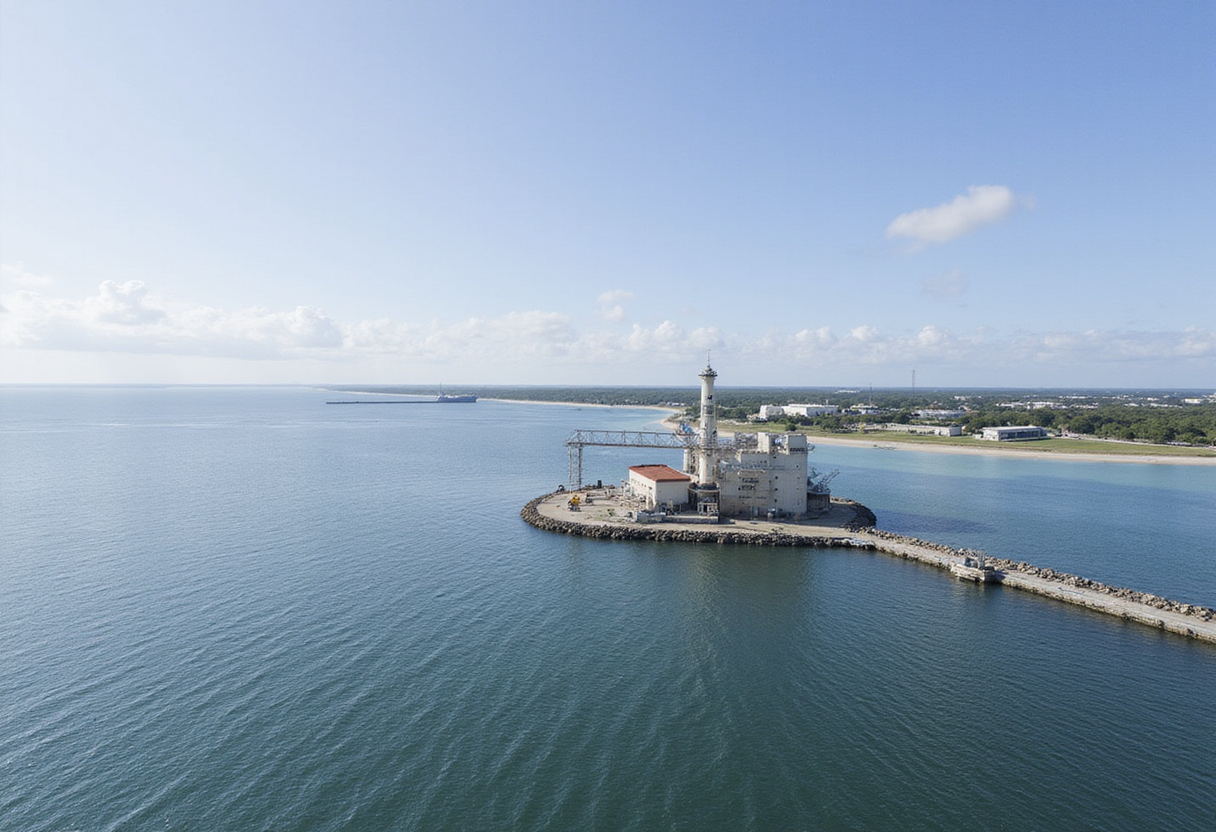
Galveston Wharves cleared a Power LNG lease on October 8 to build a 30-acre, 400,000-gallon-per-day modular LNG facility on Pelican Island, expandable to 800,000 gallons, with commercial output set for Q4 2028.
Itinerary
- Galveston Wharves Board of Trustees approved the Power LNG lease and development agreement at its October 8 meeting.
- The 30-acre Pelican Island site sits on the east side of an approximately 82-acre port-owned tract on Galveston's deep-water harbor.
- Initial capacity of about 400,000 gallons of LNG per day across two parallel trains, expandable to 800,000 gallons per day.
- Commercial production is targeted for Q4 2028, contingent on permits, financing and operating and commercial agreements.
- Project includes a 3-million-gallon LNG storage tank, an underground natural gas pipeline and a shore-to-ship pier serving the Galveston, Houston and Texas City ship channels.
The Galveston Wharves Board of Trustees approved a lease and development agreement with Power LNG on October 8 for a 30-acre modular liquefied natural gas facility on Pelican Island, with commercial production targeted for the fourth quarter of 2028.
The project will produce about 400,000 gallons of LNG per day across two parallel 200,000-gallon liquefaction trains, expandable to 800,000 gallons per day. A 3-million-gallon storage tank, an underground natural gas pipeline and a shore-to-ship pier will back bunkering for vessels calling the Port of Galveston and the broader Galveston, Houston and Texas City ship channels.
Port director and CEO Rodger Rees framed the deal as positioning the port for an LNG-fueled fleet that is still scaling on the US Gulf.
"As more LNG-powered ships are built, demand for LNG marine fuel is reaching a tipping point," Rees said. "This facility will give Galveston an opportunity to support this growing market while further diversifying our port's operations."
What changes for travel sellers
The lease matters most to operators routing LNG-fueled ships through the US Gulf. Domestic LNG bunkering capacity outside a handful of terminals in Florida and the Caribbean remains thin, so a working Galveston facility shortens the fuel logistics chain for any operator staging LNG-fueled tonnage through Texas.
Port fees, lease economics and throughput commitments are not disclosed in the board materials. Sellers will need to wait on Power LNG's commercial agreements to see whether bunkering at Galveston lands below or above competing terminals on a per-gallon basis, and whether the shore-to-ship pier can accommodate cruise-scale fueling windows during turnarounds.
The lease covers the east side of an approximately 82-acre port-owned tract on Galveston's deep-water harbor. The agreement lists conditions on government permits, project financing, rent, and the operating and commercial contracts Power LNG must sign before construction advances.
What gets built and where
Beyond the production and storage core, the partners plan LNG or ISO tank container loading at a future port-owned dock adjacent to the leased property. Portions of Pier 34 are earmarked for ISO container loading and export. Portions of Pier 39 are set aside for truck-to-ship LNG fueling and early bunkering activity.
The source statement also names a possible path for bunkering vessels that may extend service beyond the Port of Galveston into the wider Galveston, Houston and Texas City ship channel network — a footprint that brings more Texas Gulf cruise and cargo calls within range of a single fuel supplier.
Trade-offs and open questions
The deal is conditional. Power LNG still needs permits, project financing and signed operating and commercial agreements before ground can break. The Q4 2028 commercial start assumes each milestone closes on schedule, and the capacity expansion to 800,000 gallons per day would require additional permitting and modular build-out.
Rees described Pelican Island's deep-water harbor and industrial zoning as the deciding factors for siting.
"The project will create jobs, bring more LNG-powered ships and contribute to improved air quality," Rees said. "Pelican Island, with its deep-water harbor, industrial operations and available acreage, is the ideal location for an LNG facility."
If those conditions clear on the announced timeline, Galveston enters 2029 with on-site LNG production, storage and shore-to-ship fueling tied into the Houston ship channel — a fuel-asset footprint that travel sellers may want to track as a differentiator when comparing Gulf homeport and call options for LNG-capable ships.
via Cruise Industry News (Source)
More from Grace Kim
Also boarding · Related articles
- GAL24:55
Galveston Wharves Board Tightens Grip on Fifth Cruise Terminal Talks
- GAL24:55
Galveston Aims to Manage Cruise Growth Beyond Its Road Bottlenecks
- GAL23:58
Galveston Wharves Board Moves to Take Control of Cruise Terminal Talks
- TEX01:05
Texas Cruise Lines Pivot to Shorter Itineraries
- JUN21:13
Juneau Shore Power Costs Double to $111 Million for Two Cruise Docks