Destinations & DMOs
Madagascar Revives Vanilla Islands Push, 16 Years In and Still Stuck on Flights
St.Ange and Viroleau are in Madagascar reviving the Vanilla Islands, whose cruise traffic tripled by 2018 while inter-island flights and visas stayed stuck since 2013.
Itinerary
- Cruise passengers in the Vanilla Islands region grew from 14,094 in 2014 to 49,342 in 2018 (+250%).
- The St.Ange–Viroleau mission to northern Madagascar runs November 15–20, 2026.
- A 2013 World Bank assessment recorded planned initial EU support of €700,000 for the organization.
- The Comoros assumed the rotating presidency from Mauritius on February 4, 2026, with 2026–2028 strategic directions.
- No common tourist visa covers the six destinations; Réunion and Mayotte sit under French immigration rules.
Sixteen years after the Vanilla Islands concept launched, the Indian Ocean regional bloc still can't answer its founding question: how do you sell six islands as one destination when travelers need separate tickets, visas and connections to move between them?
The latest attempt is underway in Madagascar. Alain St.Ange, former Seychelles tourism minister and first president of the Vanilla Islands Organization, and Pascal Viroleau, the organization's long-serving director general, are on a mission running November 15–20, 2026, to fold northern Madagascar into multi-island itineraries. The Madagascar National Tourism Office (ONTM) and the Diego-Suarez Regional Tourism Office (ORTDS) are coordinating the program, which targets the Diana region around Antsiranana and includes talks with the national airline.
Local reporting already describes meetings and proposed itineraries. It's too early to call any of it a confirmed air service or a closed commercial agreement. In this region, that distinction matters.
What has the Vanilla Islands actually delivered?
The concept dates to August 2010, when tourism representatives from Seychelles, Mauritius, Madagascar, Réunion, Comoros and Mayotte began exploring a shared regional identity — a Caribbean-style multi-destination play, minus the geography that makes the Caribbean work. A 2013 World Bank assessment flagged the emerging organization as an opportunity and recorded planned initial EU financial support of €700,000.
The measurable win is cruise tourism. Regional cruise passengers grew from roughly 14,094 in 2014 to 49,342 in 2018, a 250% increase driven partly by coordinated port calls and joint itineraries negotiated with operators. Costa Cruises discussed increased regional deployments in 2016; Fred. Olsen recorded 700 Indian Ocean cruise bookings in a single day. In 2019, the association partnered with the Réunion Tourism Federation to raise cruise reception standards across member ports.
The association reported 43,793 cruise passengers welcomed in Réunion during 2025 — though that single-island figure isn't comparable with the earlier regional totals.
Cruise worked because the operator manages the transport. The model sidesteps exactly the problem that has stalled everything else.
Why can't travelers move between the islands?
eTurboNews warned about this in September 2013, reporting St.Ange's push for inter-island connectivity. His argument then: unified marketing only works if travelers can move efficiently between islands. Thirteen years later, the warning still describes the situation precisely.
The airlines tried. The Vanilla Alliance, formed in May 2015, brought Air Austral, Air Mauritius, Air Madagascar and Air Seychelles into talks by June 2018 on coordinated fares, better connections, shared resources and a regional travel pass. Air Austral marketed a Vanilla Islands Pass covering multiple destinations — proof the concept could become an airline product, even if eligibility conditions and network limits blunted it.
Airline cooperation, however, isn't aviation policy. Carriers answer to route profitability, fleet availability, airport charges, bilateral air-service agreements and their owners. The governments promoting unity kept their own barriers: different immigration systems, visa rules, aviation regulations and documentation requirements. Réunion and Mayotte, as French territories, run under a separate immigration framework from the independent members. There is no common tourist visa covering all six destinations.
The result for sellers of travel is concrete. A multi-island itinerary is hard to package competitively when it requires separate tickets, awkward connections and added cost. Smaller destinations lose, because growth stays concentrated at established international gateways.
What changes in 2026–2028?
The organization hasn't dissolved. On February 4, 2026, the Union of the Comoros took the rotating presidency from Mauritius at the annual meeting in Moroni, adopting strategic directions for 2026–2028 covering combined travel products, international marketing and six-destination cooperation. A marketing commission was established, with Sydney Pierre of Mauritius tasked with strengthening international positioning.
Institutional continuity, yes. Continuity isn't integration, and the next three years should be judged on outcomes rather than the meeting count.
The practical agenda is well defined: a coordinated aviation strategy with through-ticketing and viable inter-island routes, simplified or reciprocal visa arrangements, bookable multi-island packages with transparent pricing, support for local guides and independent hotels rather than only major airlines and resort groups, and published performance data on capacity, visitor flows and combined bookings.
None of that sits within a tourism ministry's remit alone. It requires transport, immigration, finance and civil aviation authorities — the exact people the promoters have never controlled.
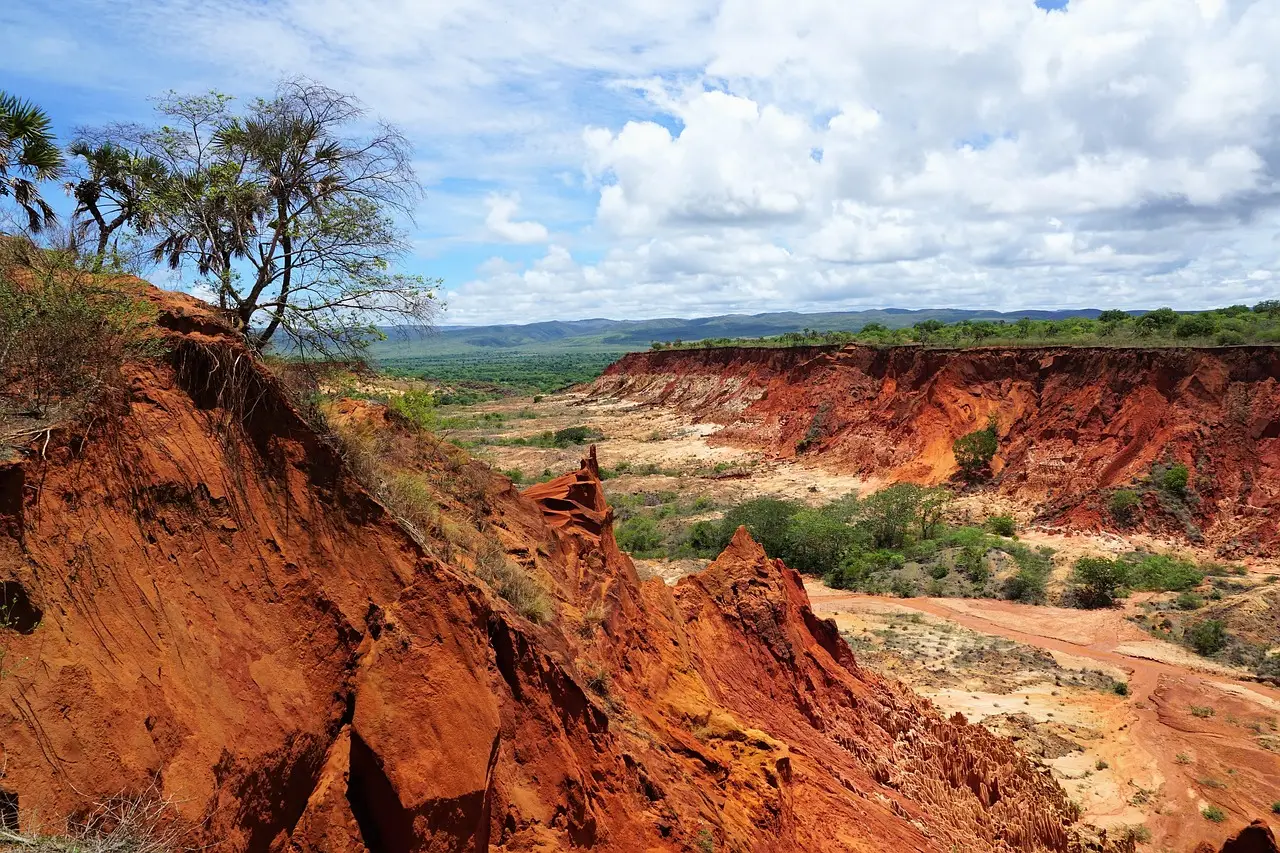
Northern Madagascar, with its biodiversity, the Red Tsingy, the Three Bays and the Emerald Sea, gives the bloc a genuine product differentiation play. Whether it becomes bookable depends on whether six governments finally match their marketing with policy.
via eTurboNews (Source)
More from Daniel Okafor
Show full bio
Market editor covering technology and product news in Tourism industry coverage for trade professionals at Travel Trade Desk.
625 articles
Also boarding · Related articles
- 02:54
Jamaica, Guyana Sign Bilateral Tourism MOU at SOTIC 2026
- 01:09
Fareportal Powers Island Bound's Caribbean Marketplace Play
- 13:35
Dominica Banks on Advisor Training to Widen Its Seller Network
- 15:21
Fiji Announces 2027 Cruise Lineup Across the South Pacific
- 10:20
Dominica Opens Cruise Season With 475,000 Visitors Forecast