TTDCRUTT 837
Competing Cruise Lines Will Jointly Build a New Terminal in Japan
Rival cruise operators will jointly build a new terminal in Japan, pooling capital in port infrastructure as berth capacity constrains Asia deployment — a shift with itinerary and inventory consequences.
Itinerary
- Rival cruise operators will jointly build a new cruise terminal in Japan, Cruise Hive reports.
- The report does not disclose cost, location, equity split or opening date.
- The deal signals sustained Asia deployment intent among competing cruise lines.
- Shared terminal capacity typically precedes itinerary expansion and new bookable inventory.
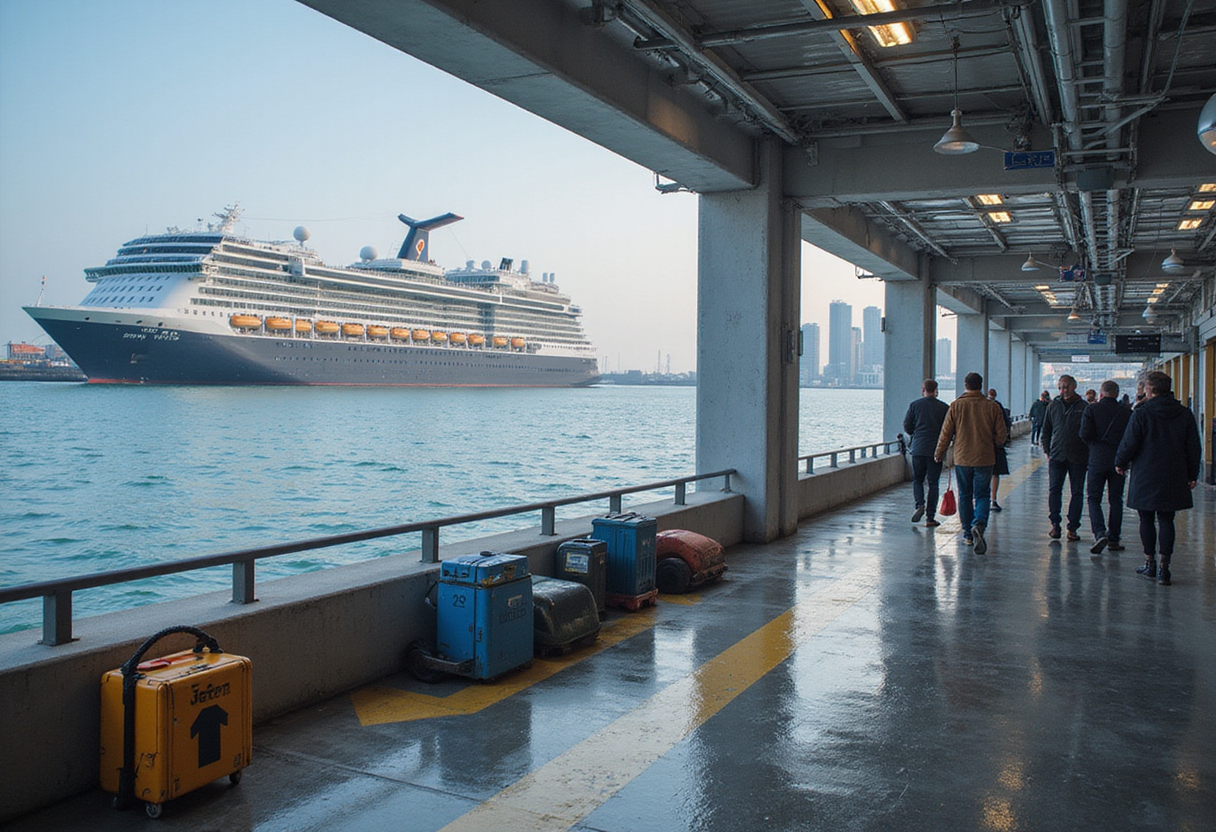
Some of the world's rival cruise operators will jointly build a new cruise terminal in Japan, according to a report by Cruise Hive — an unusual instance of head-to-head competitors pooling capital in port infrastructure rather than competing for berth allocations terminal by terminal.
The report gives few project specifics: no construction cost, no operator equity split, no opening date. What it does establish is the structural shift — cruise lines that compete for the same passengers in Asia are choosing to co-invest in the physical gateway those passengers pass through.
Why would rivals share a terminal?
Cooperative terminal development solves a capacity problem that no single line can solve alone. When berth slots are scarce, ships queue, itineraries get cut, and port calls shift to competing countries. Shared infrastructure spreads that risk across the parties.
For sellers of travel, a purpose-built terminal with committed anchor tenants usually translates into:
- More reliable port calls in published itineraries, reducing the disruption-driven refunds and rebooking costs that erode agency margins.
- Larger berth capacity, which opens the destination to bigger ships and higher passenger volumes per call.
- Longer-term homeporting potential, which shifts the destination from a port-of-call economy to a turnaround economy — hotel nights, transfers and pre-cruise packages that agencies and tour operators can actually sell.
What does this mean for the Japan cruise market?
Japan has been a demand-side strength for the global cruise business, and infrastructure has been the constraint. Asian source markets have recovered strongly post-pandemic, and Japan's port cities — several of which cap daily visitor numbers to manage overtourism — need dedicated cruise capacity if lines are to scale deployment there.
A jointly funded terminal signals that the participating operators expect sustained deployment in the region, not seasonal positioning. Deployment commitments of this kind typically precede itinerary expansion, and itinerary expansion is what distributes revenue downstream to retail agents, OTAs and shore-excursion operators.
The distribution angle
Infrastructure deals rarely change commissions directly, but they change inventory. New berth capacity creates new sailings; new sailings create new bookable inventory across every channel. If the terminal enables homeporting operations, expect the operators to push fly-cruise packages through their preferred trade partners in Japan and across Asian source markets.
There is also a competitive-dynamics reading. When rivals share a terminal, the cost base of calling at that port falls for both, which can support sharper pricing on Japan-intensive itineraries — a margin question for sellers who discount against cruise line direct channels.
What is still unknown?
The report does not specify which operators are partnering, the terminal's location, its cost, or a construction timeline. Until those details surface — likely via port authority filings or operator announcements — the trade impact remains directional rather than measurable.
Watch for confirmation of the partner line-up, the site selection, and any port authority co-funding, each of which will clarify how quickly the new capacity reaches the market and which distribution partners capture the resulting bookings.
via Google News: Cruise industry (Source)
More from Tom Whitfield
Show full bio
Staff writer covering media and advertising at Travel Trade Desk.
295 articles
Also boarding · Related articles
- ROY02:50
Royal Caribbean and MSC Group to Build Joint Cruise Terminal in Japan
- MSC02:44
MSC and Royal Caribbean Back New Cruise Terminal at Naha Port
- POR11:30
Port of Palm Beach Commits $43 Million to Cruise Upgrades
- SYD15:53
Sydney Harbour's Cruise Capacity Problem May Have Found an Answer
- CAN23:35
Can British Cruise Ports Take The Pressure Off Southampton?