TTDCRUTT 235
Shenzhen's First Southern China Cruise-to-Nowhere Sails Fully Booked
Shenzhen's first southern China cruise-to-nowhere sailed fully booked on October 30, with a 30 percent faster Shekou embarkation and Guangzhou next in line for its own pilot.
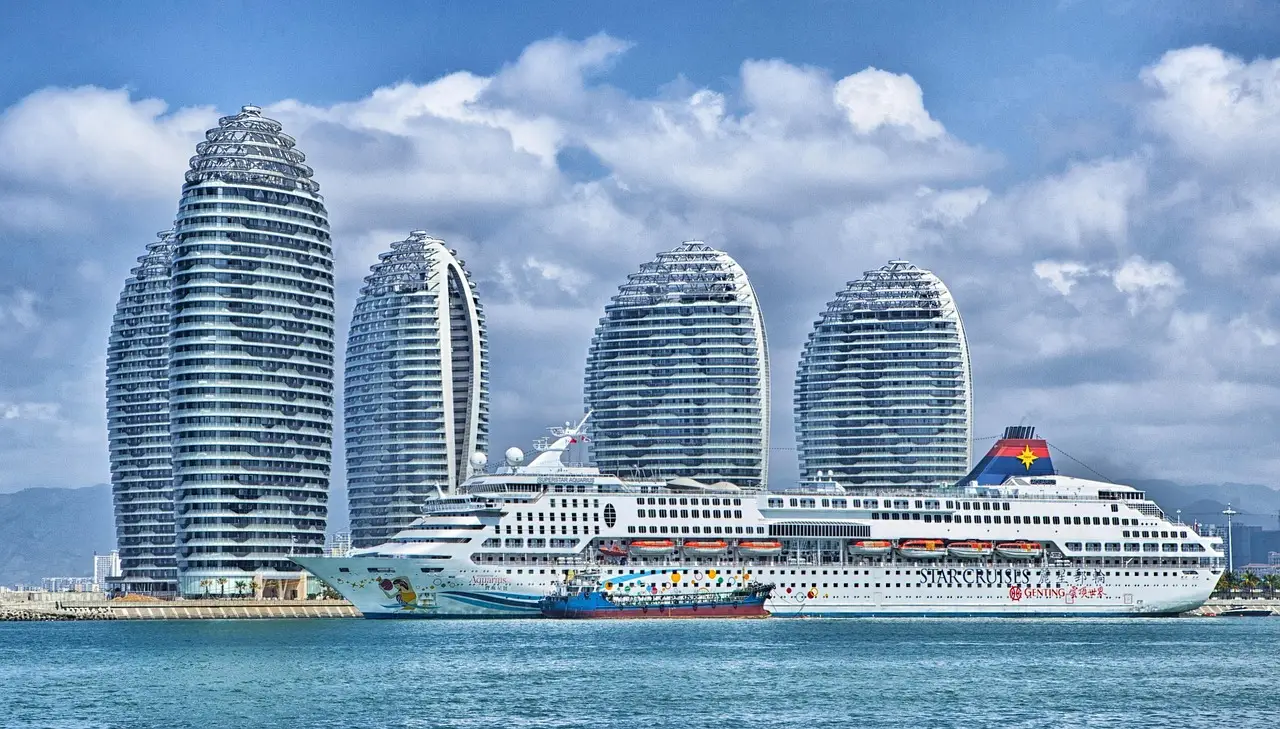
Itinerary
- The Dream departed Shenzhen Port on October 30 with the ship fully booked, on a two-night voyage
- Shenzhen is the third Chinese port to run a no-destination cruise pilot, after Shanghai and Tianjin
- Embarkation at the Shekou terminal ran more than 30 percent faster using pre-declared passenger data, extra clearance lanes and digital verification
- Passport-less mainland travelers can get a single-entry exit-entry permit via the Nanshan district public security entry-exit office with a national ID card
- Guangdong recorded 34 cruise calls and 138,600 passengers in the first 10 months of 2026, and is pursuing a similar pilot for Guangzhou
The Dream left Shenzhen Port on October 30 with every berth sold, opening southern China's first cruise-to-nowhere pilot (a sailing that departs and returns to the same port without calling at a foreign destination). The two-night voyage makes Shenzhen the third Chinese port to run the format, after Shanghai and Tianjin, and it operates under joint guidelines from the Ministry of Transport and the Ministry of Culture and Tourism.
For travel sellers, that last line carries the most weight. These sailings exist inside a permitting framework, not a normal commercial schedule, and the ministries set the rules; an operator cannot simply add a no-call departure to a published itinerary.
What changed for travelers without a passport?
The old friction point was documentation. Mainland travelers who lack a passport can now collect a single-entry exit-entry permit (one-time permission to cross a border and return) through the Nanshan district public security entry-exit office using only a national ID card. No passport application sits in the middle of the booking, which removes the longest single step from buying a cruise.
It also opens a customer base international lines cannot reach on short notice. Agencies that previously could only sell domestic hotel-and-attraction packages to passport-less families now have a two-night sea product to put in the same basket. Whether that demand repeats past one sailing is a separate question, because the Shenzhen result covers one ship, two nights, one departure — a measured outcome, not a projection.
How did Shekou turn the ship around 30 percent faster?
At the Shekou terminal, embarkation ran more than 30 percent faster, according to the account of the sailing, because border inspectors worked from pre-declared passenger data through a single-window system (one submission that lets officers check advance data at once), opened additional clearance lanes and used digital verification.
Take the figure with care. The source gives no baseline, no comparison period and no method, and the claim covers a single call. The mechanism still matters for sellers, because a two-night product earns its price on the experience rather than on days at sea, and every hour lost at the gangway eats into the time passengers paid for.
In plain terms: the speedup is worth more on a short itinerary than on a long one, where the ship has time to recover.
Why the safety administration matters to a commercial launch
Shekou Maritime Safety Administration ran the voyage under what it calls a "one ship, one plan" protocol. The ship was tracked with AIS (Automatic Identification System, the transponder broadcasting a vessel's identity and position), CCTV and VTS (Vessel Traffic Service, the shore-side system that tracks and directs shipping in a port); patrol boats and drones deployed; and inspections ran jointly with customs and immigration teams. Real-time weather data from 16 coastal observation stations fed into voyage monitoring.
That apparatus is the price of the permission. Two ministries' guidelines require it, so every new port that wants a no-call sailing has to rebuild the same inter-agency coordination before it can sell a single ticket — and that overhead lands on whoever prices the sailing.
In plain terms: "one ship, one plan" is the operating template any Chinese port must replicate before launching its own no-call product.
Where the model goes next
Guangdong authorities said work is under way to bring a similar no-destination cruise pilot to Guangzhou, and the province is preparing for the upcoming debut of the Adora Flora. In the first 10 months of 2026, Guangdong welcomed 34 cruise calls and 138,600 passengers — roughly 4,100 per call on average, a figure that counts throughput rather than berth occupancy, so it can't be read as a load factor.
For sellers, a second Guangdong product would turn the permit route into a repeatable feature to sell alongside hotel and ground transport, and it would spread the same pool of domestic cruise passengers across two homeports rather than one.
The test ahead
The real test arrives with Guangzhou's pilot and the Adora Flora's debut. Whether those sailings reproduce Shekou's faster embarkation and the same full berths will show whether The Dream sold out because domestic travelers wanted the product, or because supply was shaped around a single ship and a single date.
via Cruise Industry News (Source)
More from Sophie Lindqvist
Show full bio
Senior reporter covering people, launches and day-to-day practice in Tourism industry coverage for trade professionals at Travel Trade Desk.
488 articles
Also boarding · Related articles
- TIA02:44
Tianjin Oriental Bases Dream in Shenzhen for Nine-Cruise Season
- CHI03:10
China Expands Cruise-to-Nowhere Trials to Xiamen, Guangzhou, Shenzhen
- TIA03:19
Tianjin Orient's Dream Begins First Shenzhen Homeport Season
- BLU11:43
Blue Dream Star Exits China as Third Cruise Ship to Leave Market in 2026
- CHI03:10
China Cruise Sector Crosses Milestone as Beijing Targets Travel Boom