TTDCRUTT 136
China Expands Cruise-to-Nowhere Trials to Xiamen, Guangzhou, Shenzhen
China adds Xiamen, Guangzhou and Shenzhen to its non-destination cruise trials after 14 sea-day sailings drew guests eight years younger than typical passengers.
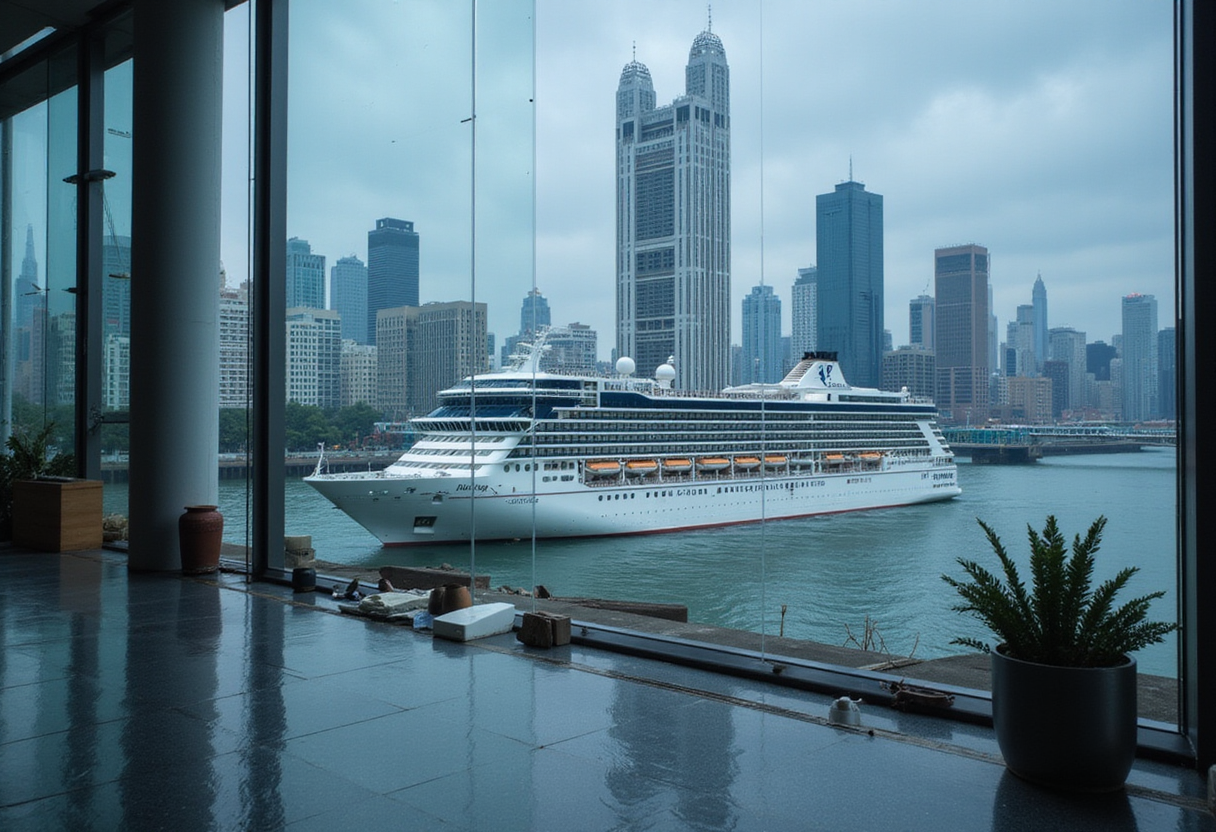
Itinerary
- 14 non-destination sailings ran across Shanghai, Tianjin and Shenzhen during the recent holiday window.
- Xiamen, Guangzhou and Shenzhen are the next-phase trial cities beyond Shanghai and Tianjin.
- Non-destination cruise guests average about eight years younger than traditional cruise passengers.
- Shanghai launched the first trial round in June with the Adora Magic City from Wusongkou terminal.
- Shanghai now issues dedicated entry-exit permits allowing ID documents instead of a standard passport.
China's Ministry of Transport will expand non-destination sea cruises beyond Shanghai and Tianjin to three new port cities: Xiamen, Guangzhou and Shenzhen, as regulators push to normalize a product that is pulling in a passenger base roughly eight years younger than traditional cruise guests.
Transport vice minister and ministry spokesperson Li Yang disclosed the expansion and said the ministry intends to keep refining the product until non-destination cruising becomes a standardized, ongoing offering rather than a limited experiment. For sellers of travel, the shift matters because it widens the port map for a low-friction, short-break product that bypasses the standard passport procedure.
What has the trial delivered so far?
The program has run three rounds of trials. Shanghai launched the first in June, sailing the Adora Magic City from the Wusongkou International Cruise Terminal. Tianjin Oriental followed in August with the Visio.
Yang said that during the recent holiday window, Shanghai, Tianjin and Shenzhen operated 14 sailings made up entirely of sea days across multiple ships — the clearest signal yet that the segment has moved beyond one-off testing into repeatable deployment.
On the demand side, Yang said the average age of non-destination cruise guests runs about eight years younger than that of traditional cruise passengers. He cited the uptake as evidence of real market demand rather than subsidized trial traffic.
Why is the paperwork change significant?
The distribution story sits in the documentation. The Ministry of Culture and Tourism said Shanghai has issued dedicated entry-exit permits for the non-destination product, allowing eligible travelers to apply with identity documents instead of going through a standard passport procedure.
That change lowers the barrier to impulse and short-lead bookings — a critical variable in a market where cruise distribution has historically been constrained by visa and documentation friction. For agents and online platforms, an ID-based product is easier to sell to first-time cruisers and younger demographics.
Yang attributed the product's traction to three factors:
- Simpler documentation requirements;
- Short three-day scheduling with what he called "near shore timing and pricing";
- Onboard leisure, duty-free shopping and entertainment options that appeal to young people and families.
Who is driving the policy?
The segment is not a single-ministry initiative. Yang said the Ministry of Transport, the Ministry of Culture and Tourism, the General Administration of Customs and the National Immigration Administration are jointly advancing policy innovation for non-destination cruising.
Four-agency coordination suggests the permits, customs and immigration mechanics behind the product will continue to evolve — which in turn determines how quickly operators can scale capacity across the six port cities now in play.
What comes next for sellers?
With Xiamen, Guangzhou and Shenzhen named as next-phase trial cities, the addressable market for cruise-to-nowhere products extends across the Pearl River Delta and Fujian coast, home to some of China's highest concentrations of short-break domestic travelers. The 14 holiday-window sailings and the ID-based permit model give sellers a template: three-day, no-passport, duty-free-focused departures positioned at a younger price point than conventional itineraries. The open question is whether normalized status — which the ministry says it is working toward — arrives fast enough for operators to commit ships beyond the current trial rotations.
via Cruise Industry News (Source)
More from Elena Vasquez
Show full bio
News editor covering marketplaces and e-commerce at Travel Trade Desk.
293 articles
Also boarding · Related articles
- TIA02:44
Tianjin Oriental Bases Dream in Shenzhen for Nine-Cruise Season
- TIA03:19
Tianjin Orient's Dream Begins First Shenzhen Homeport Season
- CHI03:10
China Cruise Sector Crosses Milestone as Beijing Targets Travel Boom
- POR03:14
PortMiami to Add 17 Ships for 2026-27 Cruise Season
- JAP02:54
Japan Cruise Demand Climbs as Major Lines Add Asia Capacity