TTDCRUTT 150
Setúbal Cruise Terminal Targets 2027 Launch With 40-Call Capacity
Setúbal's new cruise terminal is set to open in 2027 with up to 40 calls per year, APSS confirms. Ponant, Noble Caledonia and SeaDream have booked transit calls through 2030.
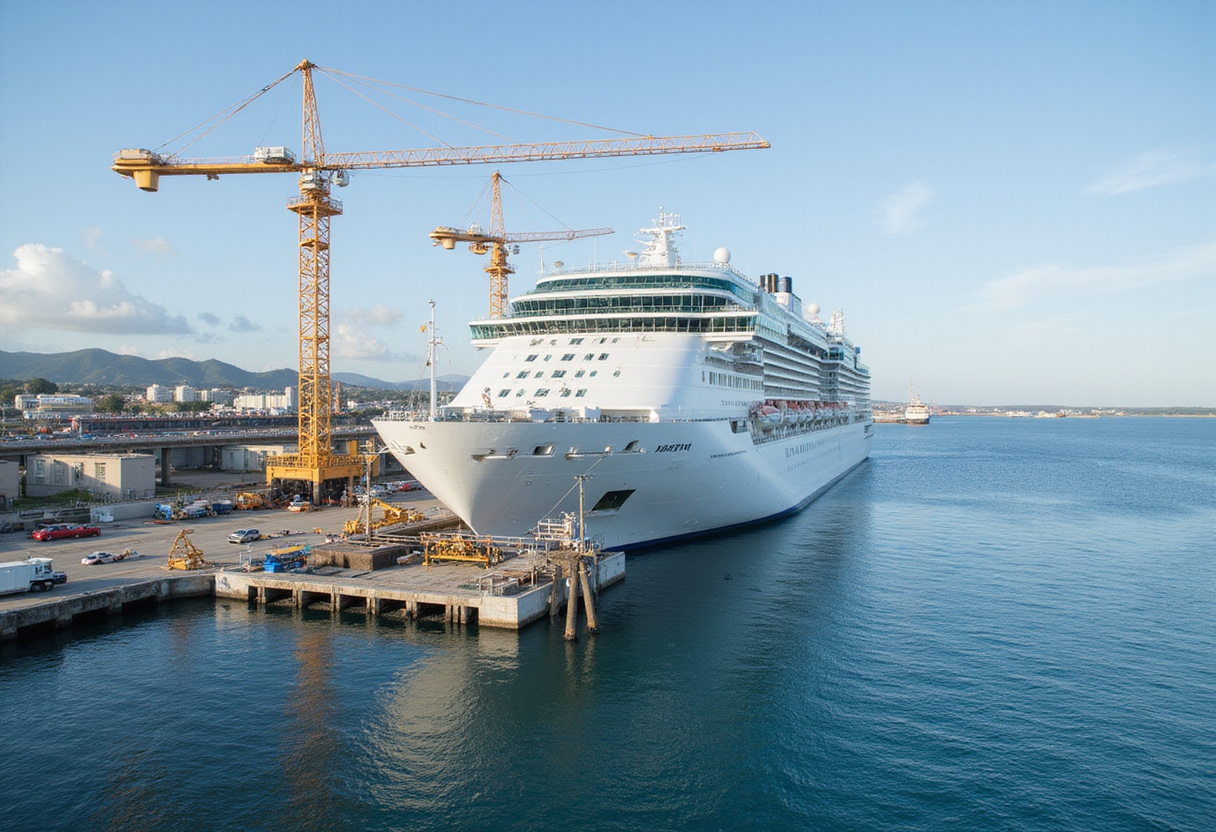
Itinerary
- Terminal opening scheduled for 2027, entering certification phase in 2026
- APSS targeting up to 40 cruise calls per year after hosting first ship in 2024
- SeaDream committed full fleet: SeaDream I and SeaDream II in 2027, SeaDream III maiden call in 2030
- Ponant and Noble Caledonia also confirmed for 2027-2028 transit calls
- Port positioned 30 minutes from Lisbon International Airport as a complementary, not competing, destination
Setúbal's new cruise terminal will open to passengers in 2027, with Administração dos Portos de Setúbal e Sesimbra SA (APSS) confirming that construction is approaching the certification phase and that line-up bookings already cover through 2030.
The Portuguese port authority has set a target of up to 40 cruise calls per year, drawing a first vessel in 2024 and now anchoring forward inventory with three expedition and luxury operators: Ponant, Noble Caledonia and SeaDream. SeaDream has committed its entire fleet to the port, with SeaDream II and SeaDream I scheduled for calls in 2027 and the new SeaDream III booked for a maiden visit in 2030. APSS framed the build-out as a distribution play rather than a head-to-head contest with Lisbon or Leixões.
How does Setúbal fit into the Iberian cruise map?
A spokesperson for APSS told Sapo the port will be marketed as a complementary destination for vessels already visiting Portugal, not as a competitor to Lisbon. The positioning matters for sellers of travel: it preserves Lisbon's mainline Mediterranean and Atlantic fly-cruise funnel while opening a secondary embarkation and transit node about 30 minutes from Lisbon International Airport on the River Sado.
The terminal will handle transit and turnaround calls and is engineered for luxury vessels, mega yachts and expedition ships — the higher-yield segments that expedition and luxury brands have been scaling across the Atlantic. For trade partners, that skews the product mix away from mass-market volume toward higher per-diem shore-side spending and pre-/post-stay extensions in the Alentejo coast and Arrábida region.
What is the berth economics?
APSS has not disclosed berth fees or concession terms, but the infrastructure choices signal a small-ship, high-spend model:
- Up to 40 calls annually, a fraction of Lisbon's roughly 300-plus annual cruise calls
- Dedicated cruise berth rather than a shared commercial quay
- Proximity to Lisnave Shipyard, which already absorbs cruise vessels for refit and upgrade work
The scale is deliberate. Setúbal's 2024 inaugural call and the 40-call ceiling keep the port below the threshold at which European cities have begun pushing back on cruise volume — relevant for sellers packaging shore-excursion-heavy itineraries that have lost berth access in Venice, Amsterdam and Barcelona.
Why does the shipyard angle matter for sellers?
Setúbal is home to the Lisnave Shipyard, the country's largest repair facility, and cruise operators have already used it for heavy refits. The 1994-built Vasco da Gama recently completed a five-week modernization program at the yard, a project Cruise Industry News reported targeted efficiency, sustainability and guest-comfort upgrades. That dual identity — destination terminal plus refit hub — gives operators a cost-side incentive to route ships through Setúbal beyond the passenger call, and gives the port a counter-cyclical revenue stream when cruise demand softens.
What is the call pipeline?
Between 2027 and 2028, APSS expects smaller cruise ships to anchor the schedule, with confirmed transit calls from:
- Ponant
- Noble Caledonia
- SeaDream (SeaDream I and SeaDream II in 2027)
SeaDream III, the brand's newbuild, is booked for a 2030 maiden visit — a long-dated commitment that effectively reserves Setúbal a slot on the newest luxury yacht's deployment map through the end of the decade.
What should the trade watch next?
The decisive trade question is whether APSS converts confirmed operator intent into firm deployment contracts with cabin allocations that travel advisors can actually book. A terminal built for luxury and expedition capacity has little distribution consequence if sailings remain transit-only, with passengers spending hours ashore rather than embarking or disembarking. APSS's 40-call ceiling, the complementary-port messaging and the absence of disclosed turnaround pricing together suggest the build is aimed at itinerary diversification and refit revenue rather than volume-based embarkation share.
APSS said the project will "strengthen Setúbal's connection to international maritime networks, boost the local economy, and create opportunities for the region." The first ship-to-shore revenue test arrives in 2027.
via eco.sapo.pt (Original)
More from Elena Vasquez
Show full bio
News editor covering regulation, policy and their impact on Tourism industry coverage for trade professionals at Travel Trade Desk.
362 articles
Also boarding · Related articles
- MAR11:05
Marella Bets on Core Homeports With Six New Itineraries for Summer 2028
- GLO02:59
Global Ports Holding Targets Spring 2027 for New Ferrol Cruise Terminal
- POR10:53
Porto Terminal Handles Record 11 Mein Schiff 6 Turnarounds
- POR03:14
PortMiami Sets Ship Lineup for 2026-2027 Cruise Season
- FER04:18
Ferrol Cruise Port to Open New Passenger Terminal in 2027