TTDBUSTT 503
European Sleeper Targets Nordic Region With First Route North
European Sleeper plans its first Nordic route, extending its night train network north. No cities or dates disclosed yet — sellers await distribution and booking details.
Itinerary
- European Sleeper has announced plans for its first route into the Nordic region.
- No launch date, endpoint cities, or partner operators were disclosed in the announcement.
- The expansion would take the operator beyond its current Central and Western European network for the first time.
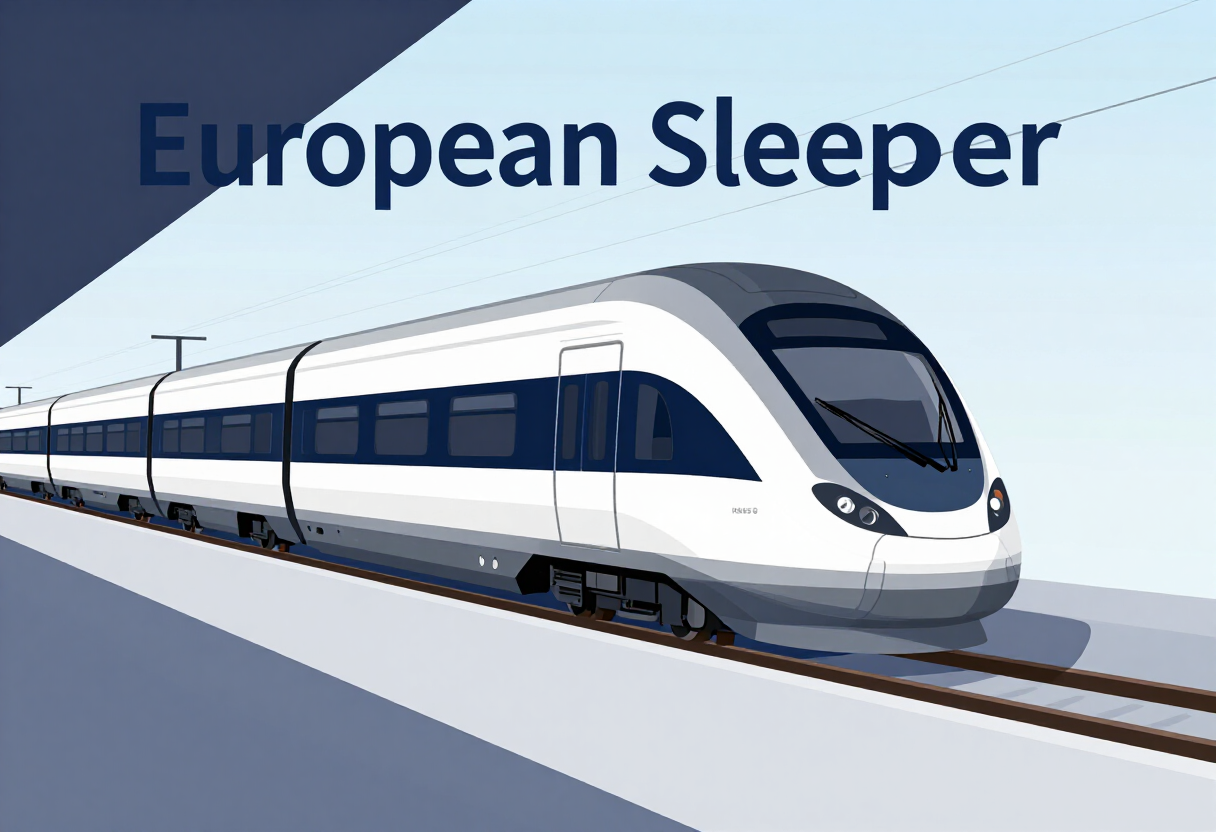
European Sleeper, the Brussels-based night train operator, has announced plans to launch its first route into the Nordic region — a move that would take the carrier beyond its current Central and Western European footprint for the first time.
The plan, reported by Business Travel News Europe, marks the operator's most significant network statement since it began building out a European sleeper business on the back of renewed demand for rail alternatives to short-haul flying. The company has positioned itself squarely in the segment where corporate travel programs and sustainability policies have been converging: overnight city-center-to-city-center connections that compete with both airlines and hotel nights.
The announcement stops short of specifics. No launch date, no endpoint cities, and no operator partners were named in the initial report. That matters for travel sellers, because Nordic rail expansion is a supply question before it is a demand question — cross-border sleeper operations depend on rolling stock availability, track access agreements with national infrastructure managers, and in the Nordic case, cross-border regulatory coordination that has historically slowed new entrants.
Why the Nordics Matter for Distribution
The Nordic corridor is one of Europe's more persistent gaps in the night train map. Demand indicators are strong — high rail mode share, dense business travel between capitals, and corporate travel buyers actively seeking flight-to-rail substitutions to meet emissions targets. What has been missing is commercially viable supply at scale.
For travel management companies and online booking tools, a new sleeper route into the region would add a sellable product in a category where inventory is thin. Night trains also present an unusual value proposition for corporate buyers: the fare competes not against a flight alone but against a flight plus a hotel night, which changes the arithmetic in rail's favor on more routes than a straight comparison suggests.
European Sleeper's existing model — running routes between Brussels, Amsterdam, Berlin and Prague — has relied on building frequency and network effects rather than competing on price alone. Extending north would connect its network to a market where the main incumbent, Snälltåget, has demonstrated that overnight rail between the Continent and Scandinavia can work commercially, most notably on the Stockholm–Berlin corridor via Berlin.
Questions Sellers Will Ask
The absence of a timetable means distribution questions remain open. Travel sellers will want to know whether the new route will be bookable through the major global distribution systems from day one, or whether — as with several recent sleeper launches — the product will initially be sold direct-only, limiting TMC access and corporate booking-tool integration.
They will also watch the pricing structure. European Sleeper has sold a range of accommodation tiers, from seats to private compartments, and the mix between leisure-oriented couchette inventory and business-ready private cabins will determine whether the Nordic route is a genuine corporate travel product or primarily a leisure play with incidental business use.
For airlines, the competitive read is straightforward: overnight rail between major Northern European business hubs takes the most profitable short-haul city pairs out of play, particularly where airport slots and early-morning schedules make flying inconvenient.
European Sleeper has not yet disclosed when the Nordic route would launch, which cities it would connect, or how the service would be sold. Those details will decide whether the announcement becomes a distribution-relevant product for the corporate travel trade or remains an aspiration — but the direction of travel is clear: the operator is betting that the Nordic gap in Europe's night train network is the next commercially viable frontier.
via Google News: Business travel (Source)
More from Tom Whitfield
Show full bio
Staff writer covering media and advertising at Travel Trade Desk.
101 articles
Also boarding · Related articles
- TUI11:13
Tui Sets Its Sights on 'Significant' Bulgaria Growth by 2030
- COR11:10
Corporate Demand Now Leads Travel Recovery, Hickory Global Partners Says
- TUI10:13
TUI Pushes Deeper Into Bulgaria With New Hotel and Added Flight Capacity
- AVA17:18
Avanti West Coast to Be Nationalised in 2027
- GBT12:10
GBTA Study Puts Numbers on Business Travel's Economic Clout