TTDDESTT 719
Skift Transatlantic Summit Sets Dublin Date With Policy-Led Roster
On October 15 in Dublin, Skift's Transatlantic Summit pairs an Irish minister and an EU transport deputy director-general with Atout France, Tourism Ireland, Meet Boston, Rail Europe and NBTC chiefs.
Itinerary
- Skift Transatlantic Summit 2026 is scheduled for October 15 in Dublin, hosted by Tourism Ireland in partnership with the European Travel Commission.
- Ireland's Minister for Enterprise, Tourism and Employment Peter Burke and European Commission Deputy Director-General for Mobility and Transport Maja Bakran Marcich are confirmed speakers.
- Distribution and platform executives from Omio, Rail Europe, Trip.com Group, Rome2Rio, Sojern and Aer Lingus are on the agenda alongside destination CEOs from Tourism Ireland, Atout France, Meet Boston, NBTC Netherlands and Montenegro's NTO.
- The agenda is built around a softening U.S. inbound market and the reset of transatlantic corridor operating terms.
- Attendance is limited and reviewed individually, with seats prioritised for director-level and senior leaders at destinations, airlines, tour operators, OTAs and policymakers.
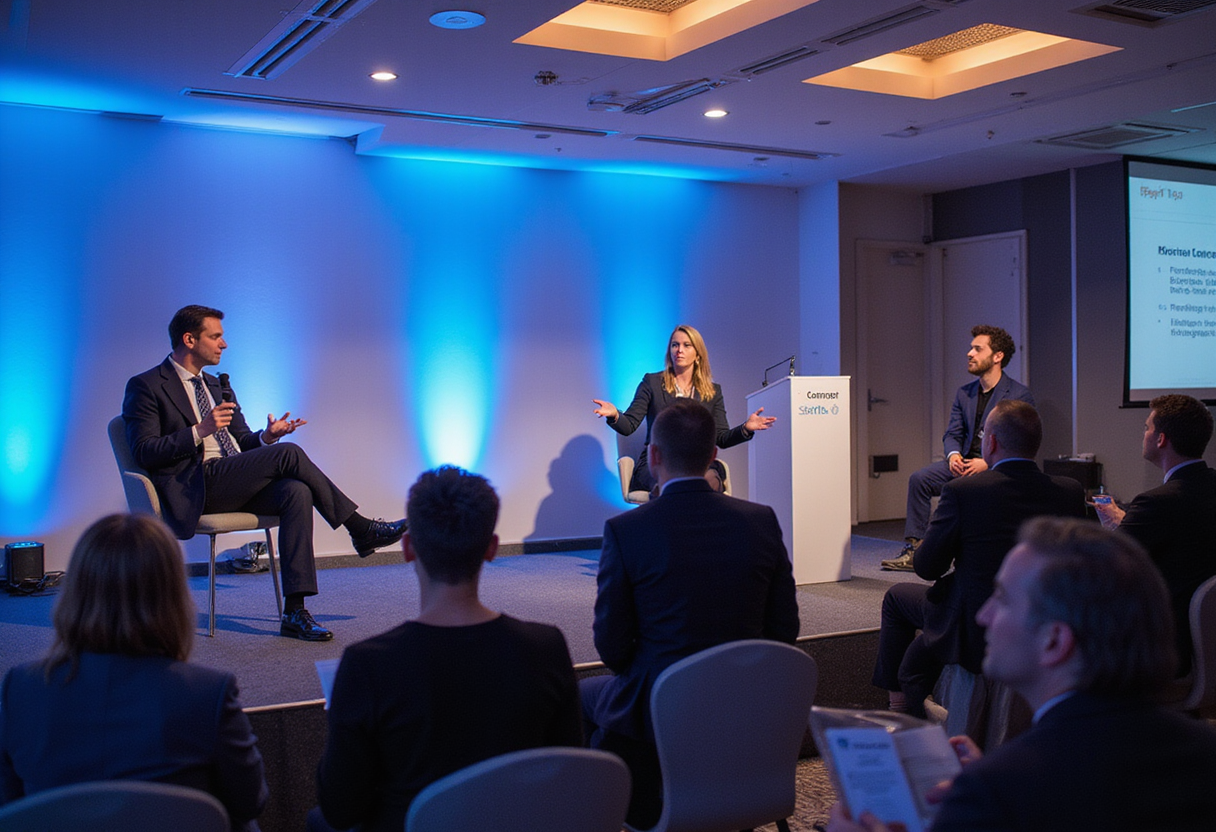
On October 15, Skift will seat an Irish cabinet minister, a European Commission deputy director-general for transport, and the senior leadership of Atout France, Tourism Ireland, Meet Boston, Rail Europe and the NBTC Netherlands in the same Dublin room to negotiate the terms the transatlantic corridor will run on next year.
The 2026 Skift Transatlantic Summit, announced this week, runs in partnership with the European Travel Commission and is hosted by Tourism Ireland. The lineup places Peter Burke, Ireland's Minister for Enterprise, Tourism and Employment, and Maja Bakran Marcich, deputy director-general for Mobility and Transport at the European Commission, alongside distribution and destination executives whose booking revenue, marketing budgets and route maps are bound by what those two policy figures decide.
Why does policy sit at the front of the agenda?
The corridor's operating terms — slots, fares, sustainability rules, visa facilitation and outbound promotion budgets — are being reset in separate rooms across Brussels and Washington this year. The agenda delivers the officials writing those rules to the same stage as the operators absorbing them. Burke opens the day. Marcich addresses the gap between regulation and growth, including the constraints that shape what carriers, OTAs and tour operators can sell and how travellers physically move. Ailish Campbell, Mastercard's executive vice president for global public sector and a former Canadian ambassador to the EU, supplies the North American trade-and-policy read.
For sellers of travel, that mix converts corridor headlines into operational consequence: which routes survive the next rule cycle, which fare structures pass muster, and how much U.S. demand stays addressable for European inventory.
Who is fighting for the softening U.S. traveller?
U.S. inbound to Europe has cooled, and every destination on the agenda is recalibrating share. Alice Mansergh, CEO of Tourism Ireland, and Eduardo Santander, CEO of the European Travel Commission, frame the growth question in that shifted market. Adam Oubuih, CEO of Atout France, and Sylvia Weiler, president of global destinations at Sojern, work on how destinations win the U.S. traveller now — and where AI redrafts the playbook for demand generation. From the receiving end, Lindsay Grant, vice president of marketing at Meet Boston, brings the view of the U.S. city competing for the same transatlantic customer.
For DMOs and their media partners, the panel doubles as a window onto where 2026 marketing spend shifts and which booking channels capture what remains of inbound demand.
How are air and ground getting stitched together?
Connectivity across modes sits in the middle of the agenda. Jean-François Bessiron, Omio's chief B2B officer and incoming CEO of Rail Europe, works the through-ticket and rail-air integration question with Reid Moody, chief strategy and planning officer at Aer Lingus. Routing demand once the seat is sold is its own problem. Wendy Olson Killion, CEO of Rome2Rio, and Edison Chen, vice president at Trip.com Group, take on how travellers actually find and book the way there — the distribution mechanics that decide whether rail inventory, OTA inventory or supplier-direct channels capture the last mile.
What reaches the operators underneath the headline numbers?
Corridor growth does not automatically reach the small businesses that depend on it. Yvonne Nassar, CEO of the NBTC Netherlands, and Ana Tripković Marković, director of the National Tourism Organisation of Montenegro, press that question on behalf of the SMEs and local economies the airport arrivals counts seldom describe. For tour operators, bedbanks and ground handlers, the session is the platform's stated test of which segments capture the marginal euro of corridor spend.
Who gets a seat?
Places are limited and reviewed individually. The room is built for director-level and senior leaders at destinations, airlines, tour operators, travel sellers and OTAs, alongside the policymakers shaping the rules the rest operate under. New Skift Research on winning travellers in an age of infinite choice, plus the executive roundtable lunch, round out the agenda.
The corridor's terms are being reset this year, and whether sellers of travel argue in the same room or react once the rules are fixed is the choice Dublin is asking its senior operators to make by October 15.
via live.skift.com (Original)
More from Grace Kim
Also boarding · Related articles
- TRA24:10
Travel Market 2026 Conference Flags Five Drivers of Advisor Growth
- SKI15:30
Skift reframes the $11 trillion travel industry around a four-layer stack
- WTT02:54
WTTC Opens 2026 Global Summit in Valletta With 200 CEOs, 1,000 Delegates
- EFW02:54
EF World Journeys Pivots to Travel-Advisor Channel
- WTT15:15
WTTC Global Summit Brings 100-Plus Tourism Leaders to Malta