TTDHOSTT 776
Postcard Hotels Goes Urban: Clubs and Suites First, City Centers Next
Postcard Hotels is negotiating three urban sites as founder Kapil Chopra plots a move into cities with all-suite hotels anchored by private members' clubs.
Itinerary
- Postcard Hotels operates 12 properties, all leisure-led retreats, founded in 2018.
- CEO Kapil Chopra says the company is in discussions at three urban locations.
- Delhi, Mumbai, Bengaluru and Hyderabad are under consideration for the first city clubs.
- The urban format will be nearly all-suite hotels with integrated private members' clubs.
Postcard Hotels, a 12-property Indian luxury operator built entirely on remote retreats, is moving into the cities — and it's bringing private members' clubs along as the financial engine. Founder and CEO Kapil Chopra told Skift in an exclusive interview that the company is already in discussions at three urban locations, with Delhi, Mumbai, Bengaluru and Hyderabad on the shortlist for the first club-integrated hotels.
That's a distribution shift, not just a branding one. Until now, Postcard's revenue model has rested on destination-led leisure inventory: Goa's beaches, Assam's tea estates, Gujarat's Gir forest. City hotels with club memberships change who buys the product, how often, and at what price point.
What does the urban format look like?
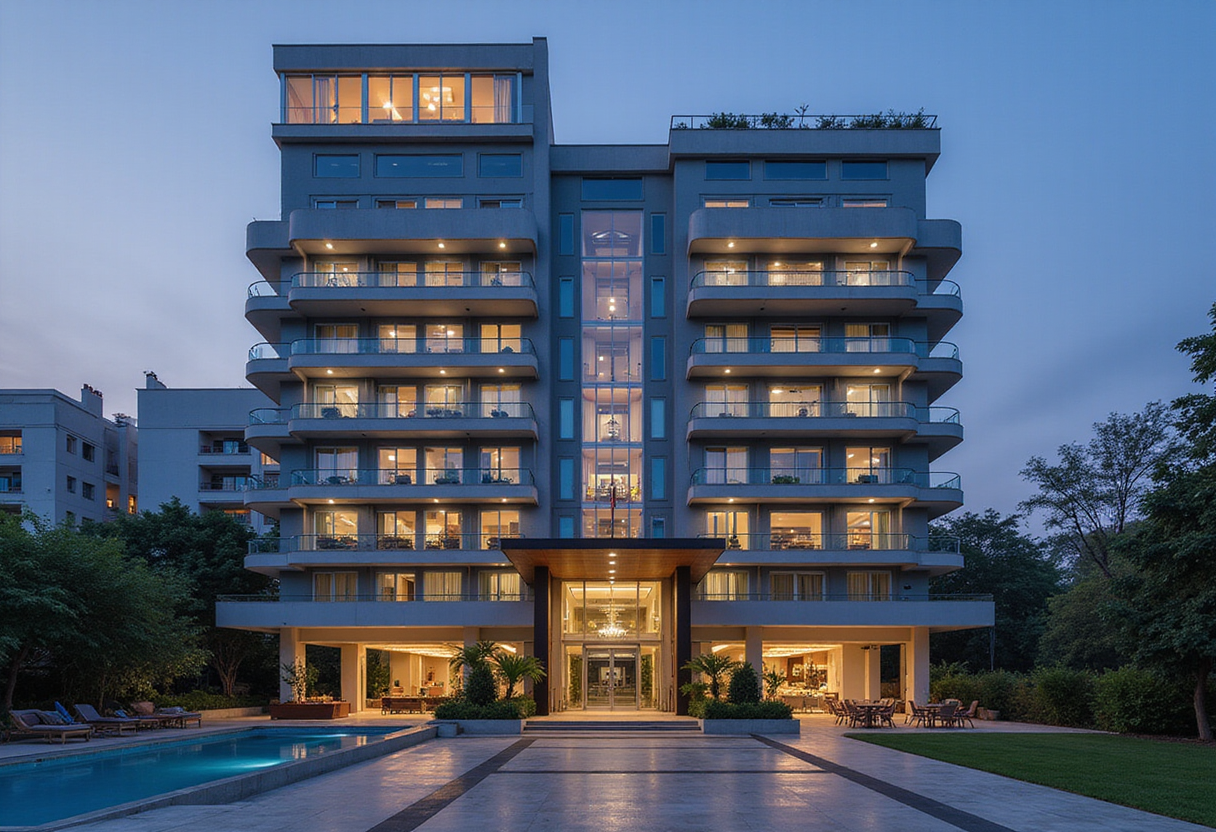
Chopra's blueprint is specific: nearly all-suite room configurations, prime addresses, and a private members' club embedded in each property. The club isn't an amenity in this model — it's the anchor. Membership income smooths the cyclicality that plagues urban luxury hotels, where corporate and event demand can swing hard quarter to quarter.
"The Postcard Hotel will come to the city in a financially workable format," Chopra told Skift. Translation: prime real estate, suites over standard keys, and a club paying rent on its own economics. That's roughly the playbook London's private-house hotels have run for years — treat the members as the base load and the overnight guests as upside.
Why the cities, and why now?
Founded in 2018, Postcard has spent seven years staying deliberately away from South Asia's business districts. The 12 existing properties sit in places travelers go to switch off, not to close deals. An urban push puts the brand into direct competition with India's established five-star chains — Taj, Oberoi, Marriott's luxury tier — in the country's four wealthiest hotel markets.
The all-suite configuration is a bet on a narrow but deep segment: long-stay executives, high-net-worth travelers, and members who want a city base rather than a bed for the night. Fewer keys per property means higher rates per key, provided occupancy holds. The club membership, presumably sold ahead of opening, converts some of that occupancy risk into committed revenue.
Chopra didn't disclose targets for room count, membership pricing or opening dates. Three active site negotiations is the concrete number on the table; everything beyond that is intent.
What's the distribution consequence?
For sellers of travel, an urban Postcard changes the calculus. Retreat properties in Gir or Assam sell through curated luxury channels and direct relationships. City hotels with clubs sell differently — corporate accounts, event bookers, and a membership base that bypasses third-party distribution altogether.
If the club model works, Postcard's urban rooms become scarcer inventory with a built-in direct-demand base. That reduces reliance on online travel agencies and global distribution systems (the networks travel agents use to book hotel inventory). Sellers should watch how much of each property's capacity the club effectively absorbs.
Is this a measured move or a pitch?
The measured facts: 12 properties, one founder-led strategy, three live site discussions, four candidate cities. The projection: a "financially workable format" that hasn't yet opened a single urban door. India's luxury urban segment is contested and expensive to enter — prime land in Mumbai or Delhi can consume a development budget before a foundation is poured.
The club-first structure is Postcard's answer to that cost problem. Whether memberships sell at the scale needed to justify the real estate is the question the first opening will have to answer. Expect the Delhi or Mumbai announcement to carry the numbers — key count, membership fee, opening window — that this interview deliberately left out.
via Skift (Source)
More from Daniel Okafor
Show full bio
Market editor covering technology and product news in Tourism industry coverage for trade professionals at Travel Trade Desk.
329 articles
Also boarding · Related articles
- NON07:45
Non-Travel Investors Are Moving Into India's Hotel Sector
- BLL04:05
BLLA Sets "The Third Space Renaissance" as 2026 Investment Conference Theme
- WAR03:04
Warburg Pincus Commits Fresh Capital to India's Lemon Tree Hotels
- HOT16:54
Hotel Investment Splits Between High-Tech Bets and High-Touch Service
- KNI03:04
Knightstone Buys Courtyard in New York, Extending U.S. Push