TTDCRUTT 490
Port Canaveral Forms Action Group to Tackle SR 528 Congestion
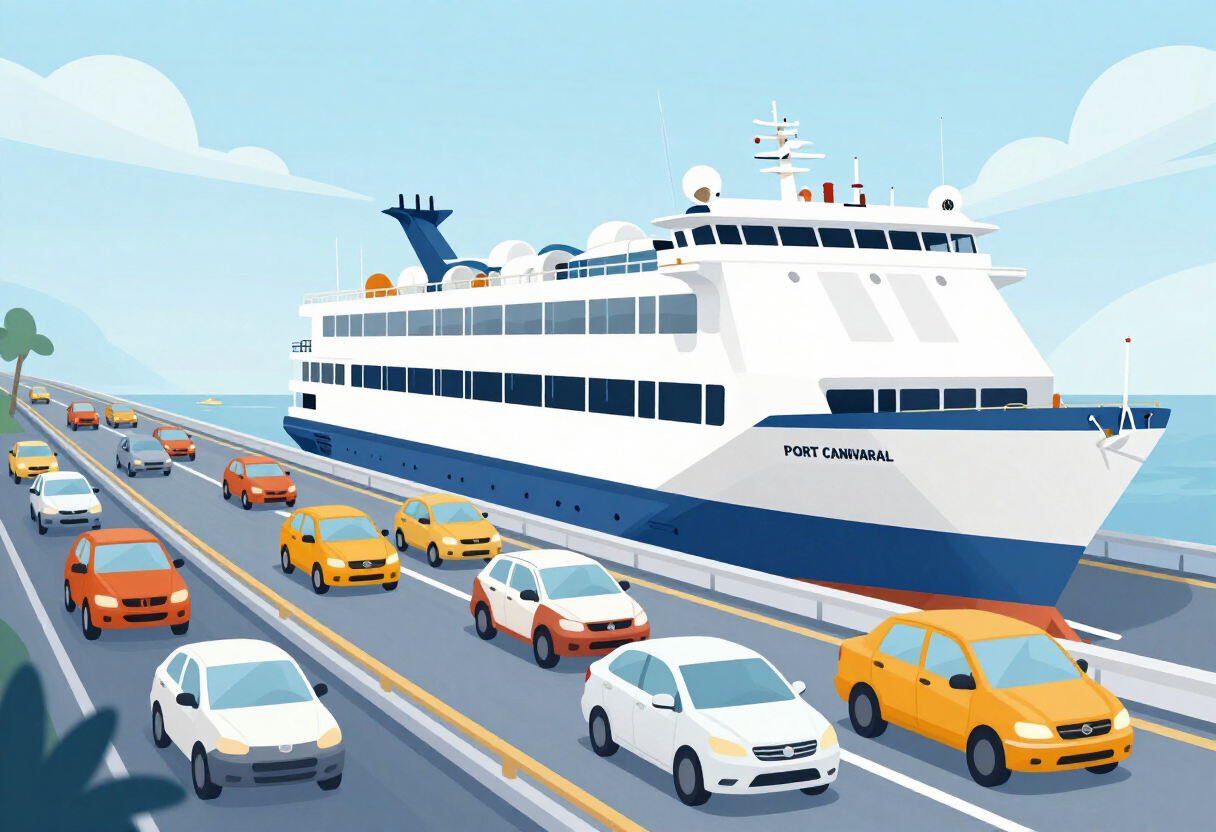
Port Canaveral has convened a multi-agency action group to tackle SR 528 congestion, moving to protect road access for cruise passengers and its competitive position among Florida homeports.
Itinerary
- Port Canaveral has convened a multi-agency action group to address congestion on State Road 528, its main highway link to Orlando.
- SR 528 carries fly-cruise transfer traffic between Orlando International Airport and the port's cruise terminals.
- No funding commitments, deadlines or measurable benchmarks were disclosed with the announcement.
Port Canaveral has convened a multi-agency action group to address congestion on State Road 528, the main highway artery linking the port to Orlando and the cruise terminals that generate its revenue.
The initiative, reported by Seatrade Cruise News, puts Florida's busiest cruise port at the center of an infrastructure problem with direct commercial consequences: if traffic on SR 528 degrades, embarkation and debarkation flows slow, and the port's core selling point — fast, reliable access for millions of cruise passengers — weakens.
Port Canaveral did not disclose a target date for delivering solutions, the agencies committed to specific funding, or measurable congestion benchmarks the group will track. The announcement, as reported, establishes coordination rather than funded construction, and sellers of cruise capacity should read it as an early-stage response rather than a fix.
Why the corridor matters commercially
SR 528 connects Port Canaveral to Orlando International Airport and the Interstate 4 corridor, the catchment that feeds the port's cruise operations. The highway carries the bulk of fly-cruise traffic transferring between Orlando's airports and the port's terminals, which serve major cruise lines operating from Brevard County.
Congestion on that corridor cuts both ways for the trade. Delayed transfers push up ground-handling costs for operators and shore-side providers, tighten embarkation windows, and raise the risk of missed sailings — the single most expensive failure mode in cruise distribution after cancellation.
For the port itself, the stakes are competitive. Port Canaveral competes with PortMiami and Port Everglades for homeport assignments from the major cruise operators. Cruise lines weigh road access, terminal capacity and turnaround efficiency when allocating ships; a port that cannot guarantee smooth passenger flow on embarkation day risks losing calls to rivals with stronger infrastructure.
What the action group signals
By spearheading the group itself, Port Canaveral is positioning congestion mitigation as a port-led priority rather than waiting on state transportation planning cycles. The approach follows a pattern among high-volume cruise ports of forming coalitions with regional and state partners to accelerate infrastructure attention that would otherwise sit in long-range highway budgets.
The risk for travel sellers is that highway projects in Florida typically run on multi-year timelines, while cruise capacity at the port continues to grow. Any widening, interchange or transit solution on SR 528 will arrive after additional ships and passengers have added load to the corridor. The action group's early output — studies, phased measures or funding requests — will indicate whether near-term relief is feasible or whether the port is managing a structural constraint through 2030.
What to watch
Trade observers should track three signals: the composition and authority of the group, whether Florida Department of Transportation commits funding or scheduling to SR 528 improvements, and whether Port Canaveral or its cruise line partners introduce operational mitigations — staggered arrival windows, expanded terminal staffing or alternative transfer routing — in the interim.
Port Canaveral has framed the group as a proactive step. Until it produces funded measures, cruise sellers and shore-excursion operators dependent on Orlando transfers should treat SR 528 congestion as a live operational risk and build schedule buffers into fly-cruise itineraries through the port.
via Google News: Cruise industry (Source)
More from Sophie Lindqvist
Show full bio
Senior reporter covering industry trends and analytics at Travel Trade Desk.
108 articles
Also boarding · Related articles
- POR24:43
Port Canaveral Lines Up More Ships, Passengers for Next Year
- POR22:28
Port of Palm Beach Commits $43M to Cruise Terminal Expansion
- POR11:30
Port of Palm Beach Commits $43 Million to Cruise Upgrades
- AAP17:56
AAPA Members Elect New Leadership for 2026-2028 Term
- POR08:53
PortMiami Logs 10 Millionth Cruise Passenger as Volume Milestone