TTDBUSTT 533
Dammam Airport Hit as Saudi Aviation Crisis Deepens
Dammam International Airport came under attack Sunday evening, with damage and casualties unconfirmed. Airlines now face cancellation, airspace and overflight questions across the Gulf.
Itinerary
- Dammam International Airport was attacked on Sunday evening.
- Damage and casualty details remained unconfirmed in the immediate aftermath.
- The incident raises questions on flight cancellations, regional airspace safety and international overflights.
- Implications could extend beyond Saudi Arabia's airports to Gulf-wide route networks.
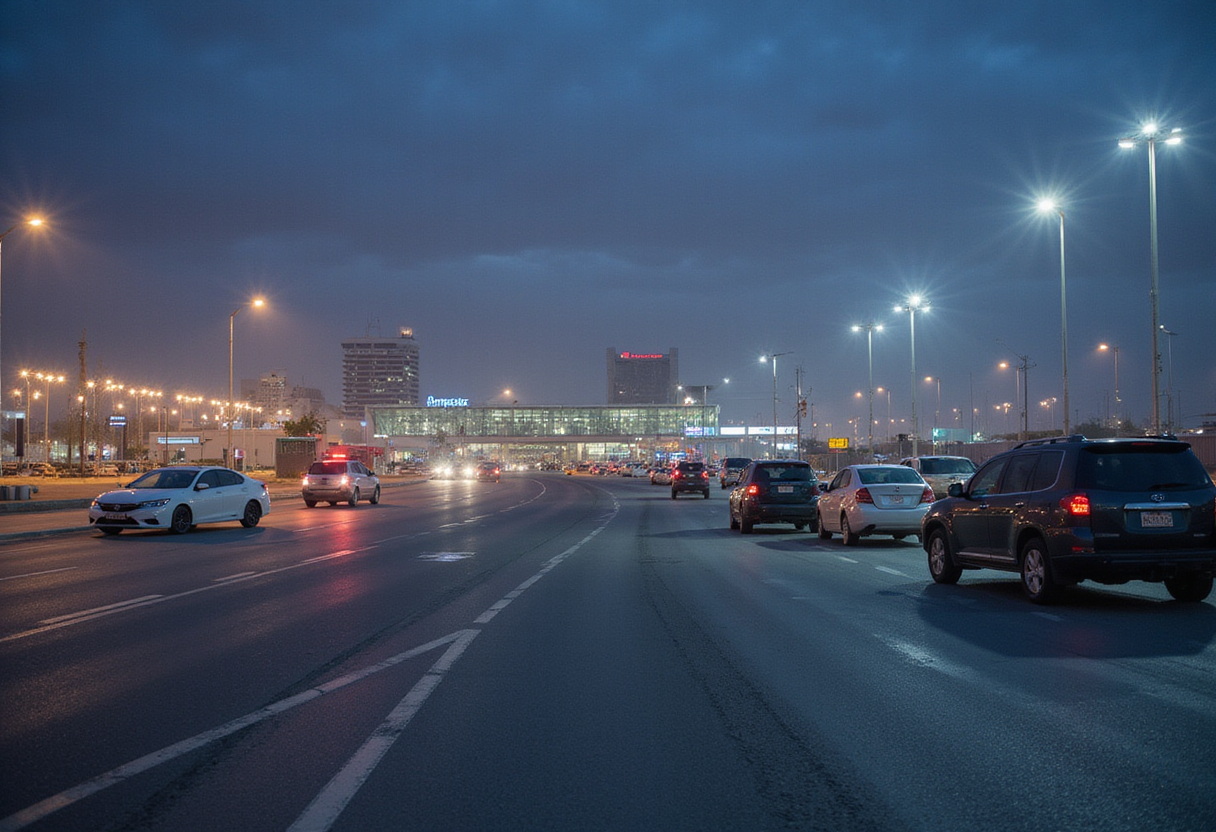
Dammam International Airport came under attack on Sunday evening, plunging Saudi Arabia's aviation sector into a security crisis whose damage and casualty picture remained unclear in the immediate aftermath.
For airlines, the uncertainty is the story. Without confirmed assessments of runway, terminal or infrastructure damage, carriers serving King Fahd International Airport cannot yet price the operational risk — and that uncertainty propagates fast through schedules, crew planning and interline connections across the Gulf.
The attack lands on a facility that anchors the Eastern Province, Saudi Arabia's industrial heartland and a market where business travel demand is concentrated around energy-sector corporate accounts. Any sustained disruption at Dammam does not merely affect leisure itineraries; it touches high-yield corporate contracts, oil-industry charter movements and freighter operations that travel sellers in the region depend on for margin.
What does the attack change for carriers and sellers?
The immediate commercial questions fall into three buckets:
- Cancellations and rebooking exposure. With damage details still unverified, airlines face decisions on whether to suspend, reroute or continue operations — each choice carrying different refund, reaccommodation and commission-recapture consequences for agencies and consolidators.
- Regional airspace safety. A security incident at a major Saudi airport forces carriers to reassess route planning across the wider region, not just the affected field.
- International overflights. Saudi Arabia sits on some of the world's busiest connecting corridors between Europe, Asia and Africa. Overflight reassessment by foreign carriers would shift traffic flows and connection economics well beyond the Kingdom's own carriers.
The implications, as the original report notes, could extend far beyond Saudi Arabia's airports.
Why uncertainty is the hardest variable for travel sellers?
Trade buyers know the pattern: when an airport incident produces unconfirmed casualty and damage reports, the booking curve reacts before the operational picture settles. Corporate travel managers hold placements. Leisure customers wait rather than rebook. Insurers and assistance providers revisit coverage terms for the affected market.
Airlines, for their part, must weigh their own assessments against government guidance, and the gap between the two is where distribution partners get squeezed — caught between cancellation policies on one side and customer demand for certainty on the other.
The attack also lands at a moment when Gulf aviation competition is framed around hub reliability. Carriers and airports across the region compete explicitly on the promise that connections are safe, predictable and recoverable when disruption hits. A security incident at a Saudi international airport tests that proposition directly, and rivals' sales teams will not be slow to exploit any perception gap.
What happens next?
Watch three things: the pace at which Saudi authorities confirm the damage assessment, the response of foreign carriers and civil aviation regulators on overflight rights, and the speed with which airlines publish revised waiver and rebooking policies for Dammam itineraries. Until damage and casualty details are established, every schedule decision touching the Eastern Province — and every overflight crossing Saudi airspace — remains provisional.
via kfia.sa (Original)
More from Sophie Lindqvist
Show full bio
Senior reporter covering industry trends and analytics at Travel Trade Desk.
330 articles
Also boarding · Related articles
- RIY15:45
Riyadh Airport Strikes Disrupt Flights as WTTC Summit Opens in Malta
- RIY08:44
Riyadh Airport Attacks Put Saudi Tourism Billions at Risk
- HOU15:39
Houthi Strikes Disrupt 26% of Saudi Departures, Grounding Gulf Hub Reliability
- GUL04:10
Gulf Hotel Investment Slows as Iran Conflict Clouds Pipeline
- UAE02:54
UAE Grounds Iranian Airlines as Sanctions Cascade Threatens Gulf Hubs